
VR NVL72 BoM + Power
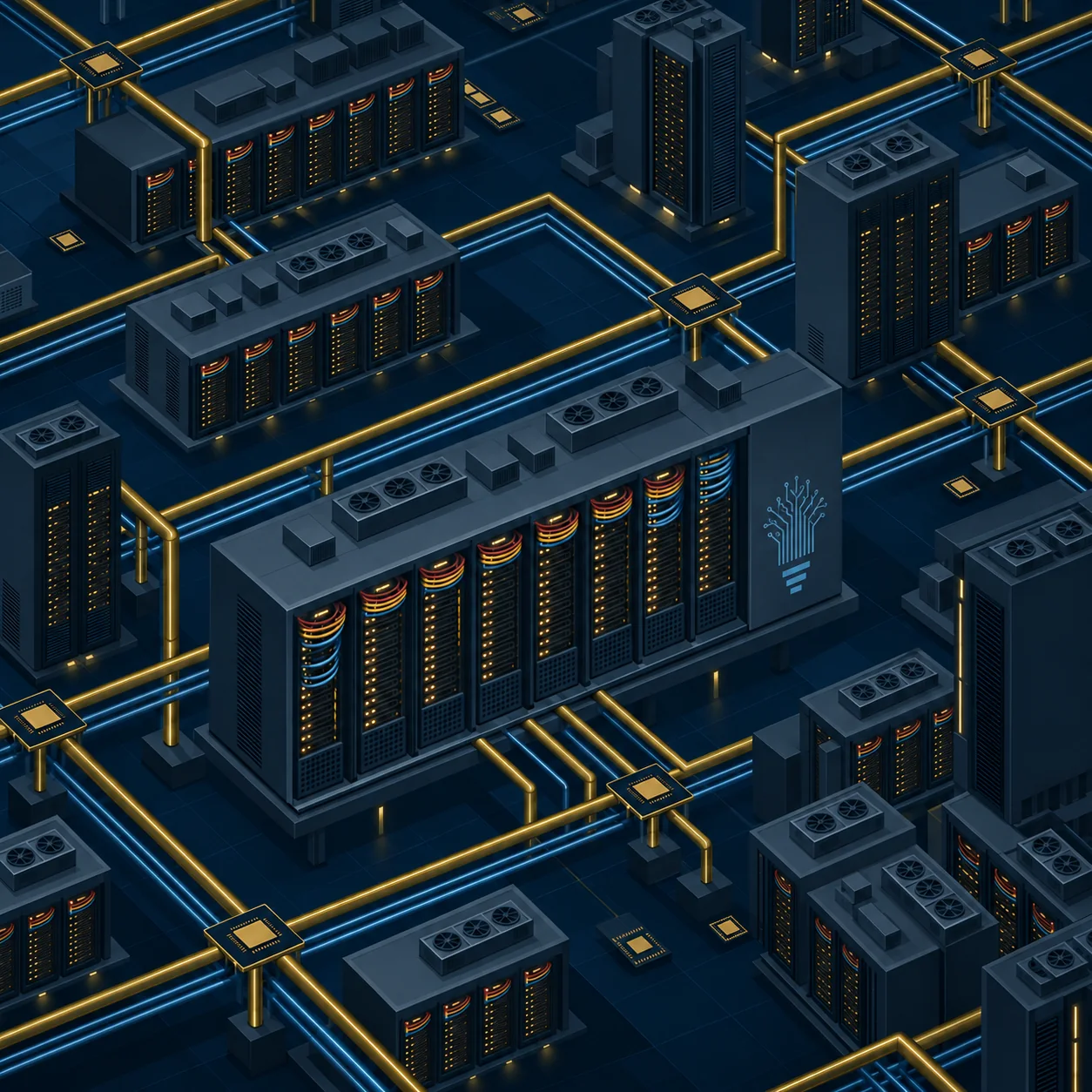
A system-level bill of materials and integrated power view for Nvidia’s VR NVL72 rack: every component priced line by line with the power budget carried beside it, from the Strata module with Rubin GPU, Vera CPU, and SOCAMM memory down to ABF substrates and glass fiber content.
One-time license. Already bought it? Log in to view the report and download.
- System
- VR NVL72
- View
- BoM + power
- Groups
- 6 subsystems
- License
- USD 10,000

The rack, priced to the last board.
The SemiAnalysis VR NVL72 Component BoM and Power Budget Model is a system-level bill of materials for Nvidia’s Vera Rubin NVL72 platform, with an integrated power view beside the dollars. It enumerates the platform component by component: the Strata compute module with Rubin GPU, Vera CPU, and SOCAMM memory, NVLink switching, tray infrastructure, liquid cooling, substrates and materials, and power delivery.
Every subsystem is a set of component line items, so the model answers both questions at once: where the dollars sit in the rack, and where the watts go. The same six groups carry the bill of materials and the power budget.
Who uses it, and what it decides.
The buyers of this model, and the calls they make with it.
- Investors & strategists
- Where the dollars sit in the platform: component-level content across compute, switching, cooling, substrates, and power, and which line items dominate the bill as the rack ramps.
- Hardware & supply chain teams
- A component-by-component reference for the rack: what sits in each tray and module, what it connects to, and the power each subsystem group draws next to what it costs.
Six groups, one bill.
The subsystem groups the model prices, with the power budget integrated across them.
The bill of materials
Six subsystem groups, enumerated component by component:
Compute & interconnect modules
The Strata module with Rubin GPU, Vera CPU, and SOCAMM memory, plus BlueField-4 and ConnectX-9
NVLink & switching
NVSwitch, the NVLink backplane and cabling, and the connectors and VRMs around them
System & tray infrastructure
The compute tray and midplane, and the host CPU management module
Thermal & liquid cooling
Cold plates, manifolds, the rack manifold, quick disconnects, and fans
PCB, substrate & materials
Key system boards, ABF substrates, and laminate and glass fiber content
Power delivery & supply
Power shelves, busbars, connectors, VRMs, and power delivery modules
The power budget
The same groups carry an integrated power view: delivery hardware from power shelves and busbars down to module VRMs is priced as components, and the budget it serves reads beside the bill, so cost and watts stay in one view of the rack.
Follow the watt.
How power moves through the rack, from the facility whip to a one volt die, in six stations. Point at a station to see its figures and what the model prices there.
VR NVL72 · POWER ONE-LINE
01 · Facility whips
Power enters the rack as 415 to 480 VAC, three phase. Each 110 kW shelf is fed by two 100 A whips: eight AC feeds across the rack.
Priced in the model at this stage
- Rack input power budget180–220 kW
- AC whip feeds8 × 100 A
02 · Power shelves
Four 110 kW shelves rectify the AC feed down to 50 VDC, three carrying the rack with one in reserve. Each shelf is 3U tall and holds six 18.3 kW power supplies with capacitors built in.
Priced in the model at this stage
- Power shelves4 × 110 kW
- Power supply units24 × 18.3 kW
- PSU capacitorsbuilt into each
03 · The busbar
A single 50 VDC busbar rated past 5,000 A carries the whole rack, up from 2,900 A in GB200. The rack has no fans, so the bar itself is cold-plated and rides on the liquid loop.
Priced in the model at this stage
- 50 VDC busbar5,000 A+ rated
- Busbar liquid coolingcold-plated rail
04 · Into the tray
Each of 18 compute trays taps the bar through busbar clips. Internal busbar cables split three ways: both Strata boards take 50 V directly, and a feed under the midplane reaches the PDB, which serves the front modules at 12 V.
Priced in the model at this stage
- Busbar clipsper tray
- Internal busbar cablesthree-way split
- Power distribution board12 V front feed
05 · Strata & IBC
A Strata board draws about 4,800 W and takes 50 V straight to the board, where Bianca took 12 V. The on-board IBC steps 50 V to 12 V beside the load: 96 A at 50 V loses seventeen times less in the copper than 400 A at 12 V. Its two Rubins and one Vera share the 4,800 W envelope, and power sloshes between them with demand.
Priced in the model at this stage
- Strata boards36 per rack
- IBC modulesone per Strata
- 50 V board connectorsper board edge
06 · VRMs & the dies
Point-of-load VRMs make the last step from 12 V to about one volt at the die edge, over dedicated power layers in the PCB. The budget ends at the silicon: each Rubin at 2,300 W on Max-P or 1,800 W on Max-Q, and Vera boosts when GPU demand drops.
Priced in the model at this stage
- VRM phasesper GPU + CPU rail
- Power semisvolume + ASP
- Per-part power budgetGPU · CPU · memory · NICs
220 kW per rack at Max-P.180 kW per rack at Max-Q. Every station above is a priced line in the model.
Six stations trace the rack power path: facility whips at 415 to 480 volts AC feed four 110 kilowatt power shelves, which rectify to a 50 volt DC liquid-cooled busbar rated past 5,000 amps. Each compute tray taps the bar through clips; internal busbar cables feed both Strata boards at 50 volts and a power distribution board at 12 volts. On each Strata an IBC steps 50 volts to 12, VRMs step 12 volts to about one volt, and the budget ends at two Rubin GPUs and one Vera CPU sharing a 4,800 watt envelope. Selecting a station shows its drawing, figures, and priced content.
The drawing is a one-line, not a wiring diagram. In the model every stage is a priced line with its share of the power budget, from shelves and busbars down to the power semis in each VRM.
How the model is built.
The system first, a bill second, and the power budget carried through.
-
Tear the system down
The rack is enumerated level by level: trays and midplanes, modules and switches, boards and substrates, down to laminate and glass fiber content.
-
Price every line
Each component carries its own line in the bill of materials, grouped into the six subsystems, so content per rack rolls up from the parts.
-
Carry the watts beside the dollars
The power view is integrated with the BoM: delivery hardware is priced as components, and the budget it serves sits next to the cost, group by group.
Common questions.
Anything not covered here, email sales@semianalysis.com.
What does the VR NVL72 model include?
A system-level bill of materials and integrated power view across six groups: compute and interconnect modules (the Strata module with Rubin GPU, Vera CPU, and SOCAMM memory, plus BlueField-4 and ConnectX-9), NVLink and switching infrastructure, system and tray infrastructure, thermal and liquid cooling, PCB, substrate, and materials content, and power delivery and supply.
What is the Strata module?
The compute building block of the platform: Rubin GPU, Vera CPU, and SOCAMM memory on one module. The model prices it with the VRMs and substrate content around it, and follows the rest of the tray from there.
Does it cover power as well as cost?
Yes. The model is a bill of materials with an integrated power view: power shelves, busbars, connectors, VRMs, and power delivery modules are priced as components, and the power budget reads alongside the six groups.
Which platform generation does it cover?
The Vera Rubin NVL72 rack generation: Rubin GPUs, Vera CPUs, and the NVL72 architecture around them, from Strata modules to NVSwitch trays and the rack manifold.
How is the model licensed?
As a standalone licensed model at USD 10,000, separate from the newsletter subscription. Buy it on this page: log in or create an account and complete the purchase. Once you have bought it, logging in here shows the report and the download.
Models that pair with this one.
The rack sits in a bigger stack. These models carry the rest of it.

Accelerator & HBM Model
The chipsAccelerator shipments, roadmaps, and HBM: the demand side of the racks this model prices.
View model
AI Networking Model
The fabricThe fabric beyond the rack: switching, optics, and cabling across scale-up and scale-out.
View model
Datacenter Industry Model
The buildoutWhere the racks land: datacenter capacity, power, and the buildout that hosts NVL72.
View modelGet the VR NVL72 model.
Log in or create an account, complete the purchase, and the report and download open on this page.
- Component-level BoM with integrated power view
- One-time license at USD 10,000
- Report and model download on this page after purchase
One-time license
USD 10,000
Separate from the newsletter subscription. Sign in with your SemiAnalysis account, or create one, to buy.
Buy the modelAlready bought it? Log in to view the report and download.